

Lewis Rice Featured in Media Coverage on Proposed Central Iowa Trail Project
May 20, 2026
share this page:
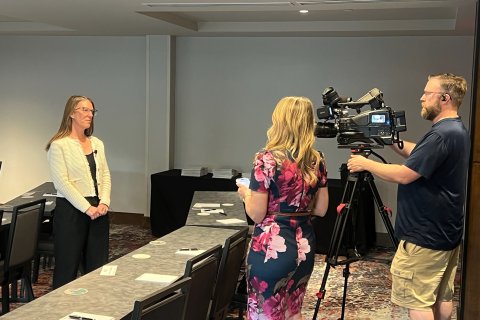
Lewis Rice’s Federal Takings & Rails to Trails Practice Group Leaders, Meghan S. Largent and Lindsay S.C. Brinton, were recently featured and referenced in media coverage, including WHO13 News and the Business Record, discussing legal and community considerations surrounding a proposed recreational trail project along an abandoned rail corridor connecting Des Moines and Grimes, Iowa.
The proposed project has generated significant public interest as local leaders, developers and residents consider future uses for the approximately 12-mile rail line. The coverage examines the future of the rail line, including questions related to land use, trail development and the potential impact on surrounding property owners and communities.
Quoted by WHO13 News, Meghan explained that many landowners may retain underlying property rights following rail abandonment: “Legally, they’ve owned it all along. It’s just been subject to a railroad easement for over a century… once it’s abandoned, it would disappear, and essentially those landowners would get full use and enjoyment of that land.”
Meghan and Lindsay provided insight into the legal and practical considerations associated with converting former rail corridors into public-use trails, including the regulatory processes and stakeholder interests involved in projects of this nature.
Lewis Rice's federal takings attorneys represent landowners throughout the United States pursuing takings claims against the federal government. One primary focus of the group is representing landowners in what is commonly referred to as rails to trails takings. Attorneys in this group litigate cases in the United States Court of Federal Claims on behalf of those whose property was taken by the federal government pursuant to the National Trails System Act, which authorizes abandoned railroad lines to be converted to public parks. The goal is to obtain compensation from the government for the taking of their land for the public recreational trail. The attorneys in the Federal Takings Practice Group focus on both proving the taking has occurred as well as establishing the value of the property that was taken. Their national work for landowners includes representing landowners coast-to-coast, including 11 states.